By Amber Merten
A crossword over morning coffee. A jigsaw puzzle on the dining room table. A familiar card game after lunch. These engaging activities can give caregivers and aging loved ones something enjoyable to look forward to—and a chance to connect beyond the daily care routine.
Brain games aren’t only a meaningful part of the day, they also promote cognitive health! They can gently challenge the mind and boost skills in attention, reasoning, and word recall. Research into their lasting cognitive benefits is still developing.
The best place to start? Something your loved one enjoys.
Find the Right Fit
Consider your loved one’s interests, abilities, and energy level. Someone who has always loved words may welcome a crossword, while a person who enjoys working with their hands might prefer a beautiful jigsaw puzzle.
Try these activities together:
- Word searches and crosswords: Work side by side, taking turns finding words or reading clues aloud. Choose large-print versions when helpful.
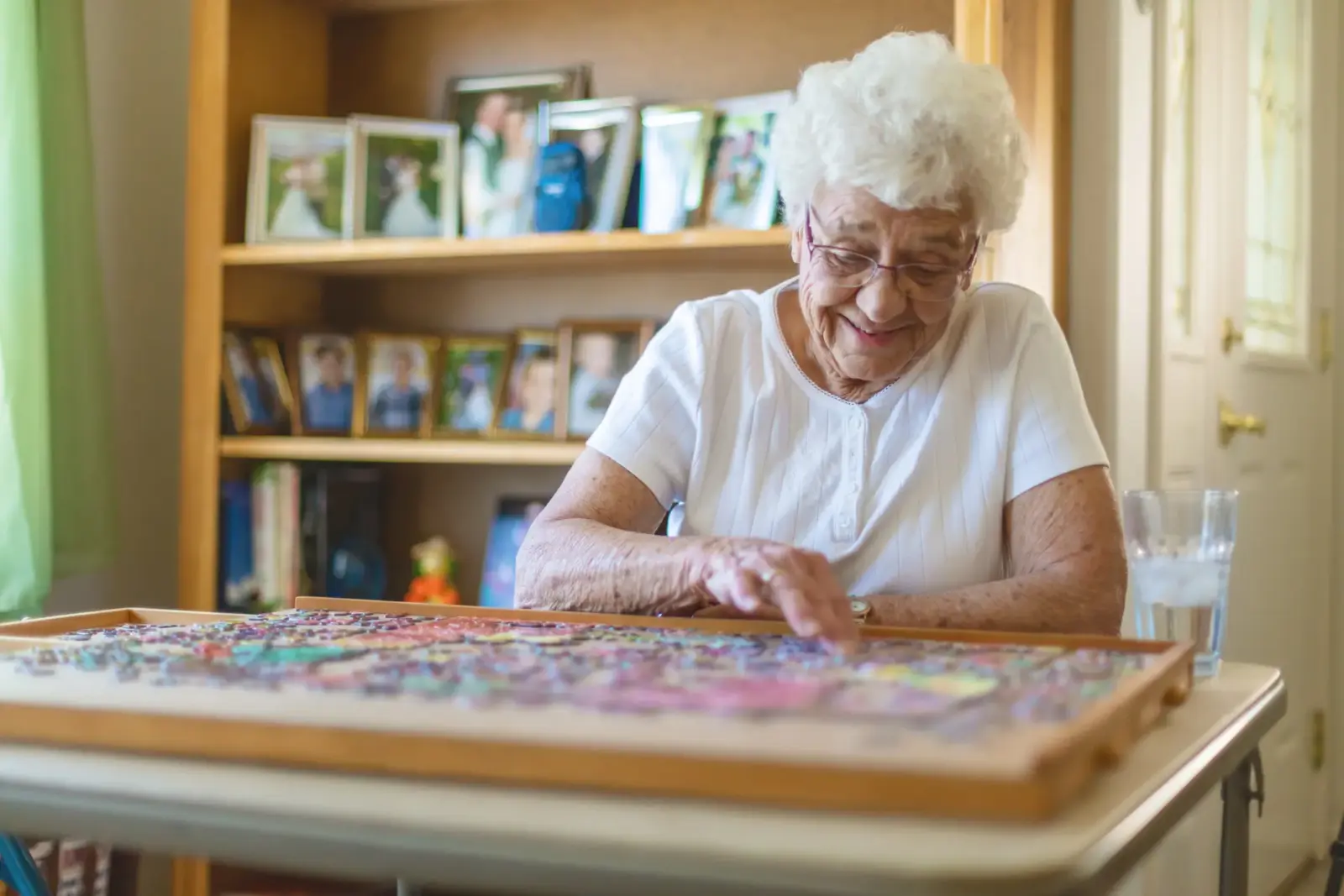
- Jigsaw puzzles: Pick an appealing image, such as a garden, animals, or a favorite travel destination. Adjust the number and size of pieces to keep the activity manageable.
- Cards and dominoes: Familiar games can offer a comfortable starting point. Use a cardholder if gripping cards is difficult.
- Music games: Take turns choosing familiar songs, finishing a lyric, or sharing a memory connected to the music. Telling detailed stories from one’s past is another great way to work the brain.
- Category games: Choose a topic, such as foods, flowers, or vacation spots, and name examples together. Keep it relaxed, with no timer required.
Make It Enjoyable, Not a Test
Caregivers can help create a welcoming experience by offering choices: “Would you like to work on our puzzle or play cards?”
Allow plenty of time to respond, offer help naturally, and avoid repeatedly correcting mistakes. Comments such as “Let’s try this piece together” can keep the activity collaborative.
For someone living with dementia, adapt the game to their current abilities. That might mean using fewer puzzle pieces, matching cards face up, or enjoying a song without asking them to name it.
Choose activities that respect their adult interests and preferences.
If frustration or fatigue appears, take a break or switch activities. There is no need to finish a puzzle for the time together to be worthwhile. Being consistent with brain games a few days a week in shorter sessions is more important than working on a puzzle for a long time and feeling overwhelmed.
Build a Simple Routine
Keep a small basket of favorite games within reach and look for a time when your loved one is comfortable and alert. Good lighting, a quiet setting, and a clear tabletop can make participation easier.
Start with a brief activity and follow their lead. Some days may bring lively conversation; others may offer a few quiet minutes of companionship.
Support That Includes Companionship
At Synergy HomeCare, we understand that daily support includes opportunities for enjoyment and connection. Our caregivers can share favorite games and activities, encourage participation, and provide companionship tailored to each person’s interests.
Contact our office to learn how personalized care can help your loved one enjoy more meaningful moments at home.
____________

Call us to find the home care solution that’s right for you.
 850-661-0557