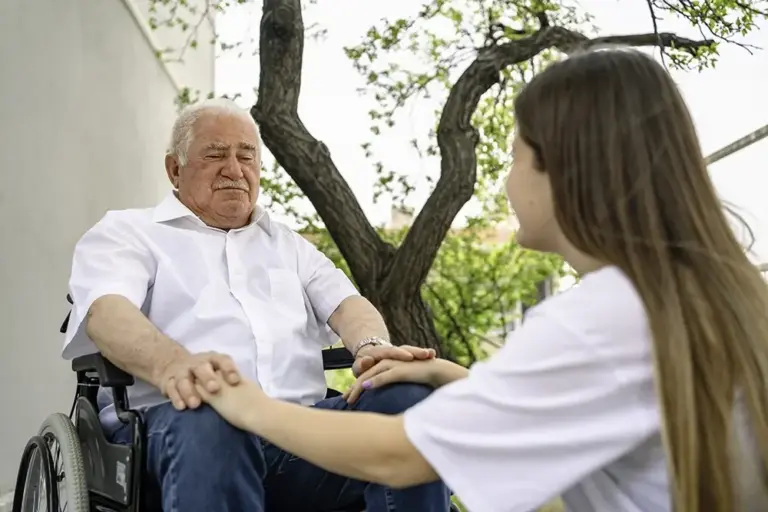
The Bladder Cancer Advocacy Network uses the month of May each year to raise awareness of bladder cancer. Bladder cancer is the 7th most common cancer and is more commonly found in men than women. If your parent has recently been diagnosed with bladder cancer, it can be easy to become stuck in the fear and panic. If you and your parent are finding yourselves in this position, here are some steps to start you toward a path of healing and restoration, and how elder care can help.
As you are processing the news:
- Reduce your fears and panic. Most people go to the worst-case scenario as soon as they hear the “C” word, but with so many advancements in treatment, cancer doesn’t have to be a life-ending event anymore.
- Honor your emotions. Both you and your parent, and those that care for him, like other family members and even those who visit often like elder care providers, will feel a wide range of emotions after the initial diagnosis. Allow each person to be mad, sad, scared, or whatever they are feeling. Especially for your parent, he should feel comfortable discussing all of his emotions regarding his diagnosis. It will help him process the news in a healthier way.
- Get help. Now is the time to round up the cavalry to help your aging parent as he begins the steps of cancer treatment and management. Talk to family members, hire or extend the duties of an elder care provider, and meet with medical experts.
As you begin the treatment process:
- Make yourself an expert. As your parent’s caregiver, he may need someone to come to each doctor visit with him to gather information as well as share information. If you can help him research the disease, he’ll be more comfortable on his visits and know what questions to ask.
- Ask for additional opinions. Find out if your diagnosing doctor is well versed in bladder cancer. If she isn’t, then search out specialists that can help you both find the best and most recent treatments. Even if the doctor you have is an expert, if you want a 2nd or 3rd opinion, seek it out. Many doctors have different processes they’ll go through for treatment. Find the one that best suits your parent.
- Talk with your parent and other caregivers about options and desires. Just because there is a “normal” treatment process for cancer, your parent and you will have to decide what he feels most comfortable doing. You might also discuss how long to continue treatments and to what extent. All of these are important conversations to have before you even begin the path to whatever treatment (or non-treatment) you may decide.
- Begin desired treatments as soon as possible. Bladder cancer doesn’t only affect the bladder, it can affect the entire urinary system, including the kidneys. While treatment may seem scary, holding off on the needed next steps can only complicate the process in the long run.
Your parent and you are the best advocates for his bladder cancer treatment and his quality of life before during and after treatment. While the road may seem frightening, have a good team to walk alongside your parent will make the journey a bit less scary.
Source: https://bcan.org/bladder-cancer-awareness-month-2021/