

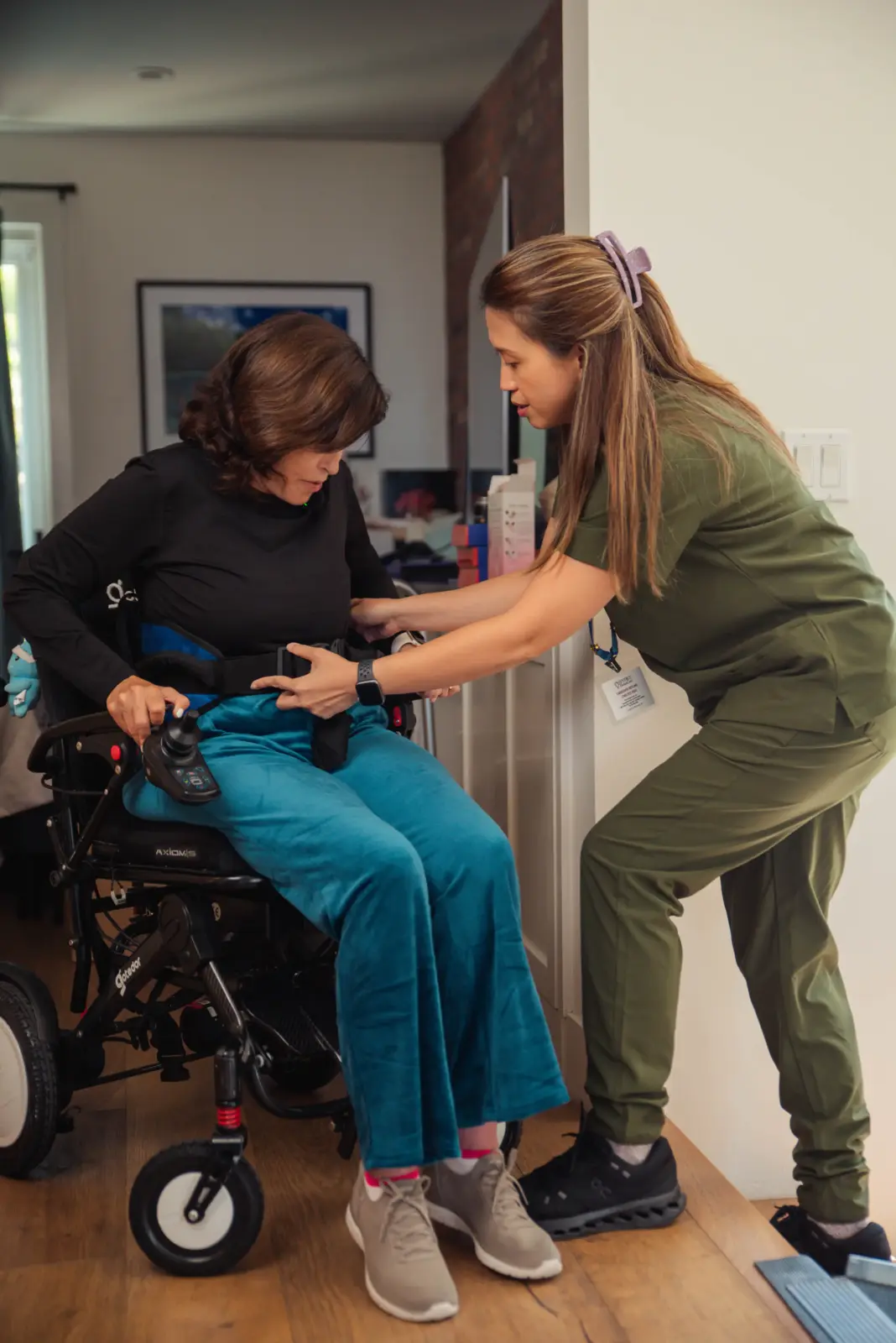
Stroke recovery doesn’t run on a fixed timeline, and it doesn’t move in a straight line either. Two people with a similar diagnosis can have very different recoveries, which is exactly why generic advice (“focus on physical therapy,” “be patient”) isn’t very useful in practice. Here’s a more specific way to think about it: organize what you’re watching for and supporting across five real domains of stroke recovery, not just physical rehab.
Mobility and fall risk
One-sided weakness (hemiparesis) is common after a stroke, and it changes how a home needs to function day to day, not just how a person walks. Clear paths between rooms, grab bars near the toilet and shower, and a second set of eyes during the first standing and walking attempts after any change in ability matter more in the early weeks than any long-term exercise plan. If a physical or occupational therapist recommended specific positioning or a mobility aid, following it consistently at home, not just during scheduled therapy sessions, is what actually makes it effective.
Communication changes aren’t all the same problem
Two different things get lumped together as “trouble talking” after a stroke, and they call for different support. Aphasia is difficulty producing or understanding language itself, finding words, following a conversation, reading. Dysarthria is slurred or unclear speech caused by weakened muscles, the person knows exactly what they want to say, the mechanics of saying it are harder. A speech-language pathologist will usually name which one (or both) is present. Knowing which one changes how you should help: aphasia calls for patience, simple direct language, and resisting the urge to finish sentences for them; dysarthria calls for asking them to slow down or repeat, not simplifying your own language, since comprehension usually isn’t the issue there at all.
Watch mealtimes for swallowing changes, not just appetite
Dysphagia (difficulty swallowing) is common after stroke and carries a real risk: aspiration, food or liquid entering the airway, which can lead to pneumonia. Coughing during meals, a “wet” or gurgly-sounding voice after swallowing, or needing much longer than usual to finish a normal-sized meal are signs worth mentioning to a doctor or speech therapist, not just something to note and move past. If a texture-modified diet or thickened liquids were recommended, that instruction matters even on the days when the person insists they’re fine with regular food.
Medication adherence affects recurrence risk directly
Blood thinners, blood pressure medication, and cholesterol management are common after a stroke, and a missed dose isn’t just a minor lapse, it raises the real risk of a second stroke. A pill organizer and someone actually checking it, not just assuming it’s being managed, closes a gap that’s easy to miss once the immediate crisis has passed and daily life starts feeling normal again.
Post-stroke depression is common and easy to miss
Roughly a third of stroke survivors experience post-stroke depression, according to research compiled by the National Institute of Neurological Disorders and Stroke, and it’s frequently under-recognized because withdrawal, low energy, and flat affect get chalked up to “normal” recovery fatigue rather than something treatable. Watching for a loved one pulling back from activities they were previously engaged in, sleep changes, or a persistent flat mood, and raising it with their care team instead of waiting for it to resolve on its own, is a real, specific thing a family can do that a service feature list won’t tell you to watch for.
Keeping follow-up care from falling through the cracks
Outpatient physical therapy, occupational therapy, speech therapy, and neurology follow-ups often run on different schedules at different offices, and missed or skipped sessions become common once the intensity of the initial recovery period passes. Someone tracking the actual calendar, and providing transportation when needed, keeps recovery moving instead of quietly stalling out a few weeks after the immediate danger is behind you.
None of these five areas requires special medical training to support well. It requires someone paying consistent attention across all five, not just whichever one happens to be most visible that week. That’s exactly where a home care plan built around stroke recovery specifically, rather than general home care, earns its place, whether that’s a few hours a day or a full rotating 24-hour schedule while the highest-risk early weeks pass.
Source: mobility, communication, and swallowing guidance per the American Stroke Association, a division of the American Heart Association; post-stroke depression prevalence per the National Institute of Neurological Disorders and Stroke (NINDS).
___________
If your family is navigating a loved one’s recovery after a stroke, a Care Consultation with our team at SYNERGY HomeCare of North County can help build a plan around what your loved one actually needs right now. Call us at (760) 990-4289 to set one up and see what stroke recovery care looks like at our North County location.

