“Companion care” and “personal care” get talked about like they’re two points on a scale, more help versus less help. They’re not. The real difference isn’t how much care someone needs, it’s what kind of help they need: hands-on physical assistance with the body, or support with everything around daily life that doesn’t require touching the person at all.
Getting that distinction right matters, because most families describing a loved one’s needs to us don’t actually know which category several of the tasks they’re describing fall into. The honest answer is usually “some of both,” and that’s fine, it’s actually the most common starting point.
What companion care actually covers
Companion care is support with the tasks around daily life, not physical assistance with the body itself:
- Meal planning and preparation
- Light housekeeping and laundry
- Transportation to appointments, errands, and social outings
- Medication reminders (prompting someone to take a dose, not administering it)
- Conversation, companionship, and general supervision for safety
What personal care actually covers
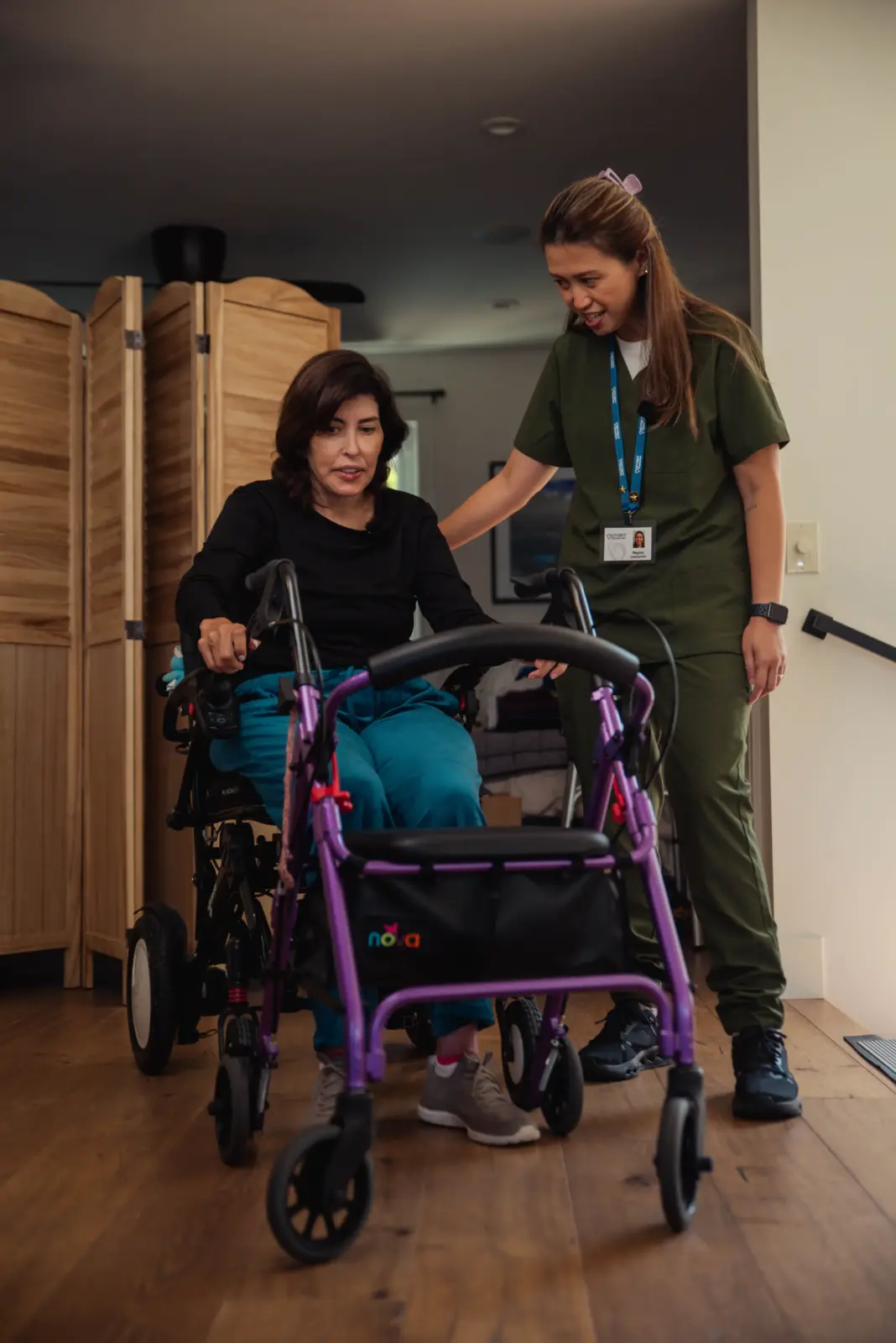
Personal care is hands-on assistance with the tasks a person can no longer safely do for their own body:
- Bathing and grooming
- Dressing
- Toileting and incontinence care
- Help walking, standing, or transferring safely (bed to chair, chair to standing)
Geriatric care planning has real, named frameworks for this distinction, not just informal categories. The Katz Index of Independence in Activities of Daily Living (ADLs) covers the personal-care side: bathing, dressing, toileting, transferring, continence, feeding. The Lawton-Brody Instrumental Activities of Daily Living (IADL) scale covers the companion-care side: meal prep, housekeeping, transportation, managing medications, handling finances. Professional care assessments are built around both scales for a reason, they’re genuinely different categories of need, and a good care plan accounts for both rather than assuming one implies the other.
The actual question to ask: is there any ADL on the list at all?
Walk through your loved one’s typical day and note where they actually need help. If everything on that list is IADL-level, errands, meals, reminders, company, companion care covers it. If even one ADL shows up, help getting dressed, into the shower, or to the bathroom safely, that’s personal care territory, even if it’s a small part of the day and the rest is companion-level support.
Most families we work with land here: mostly companion-level needs, with one or two specific personal-care tasks layered in. That’s normal, and it’s exactly why a care plan doesn’t have to be all one or all the other.
Why the distinction matters less than you’d think for planning purposes
Here’s something worth knowing before you assume personal care is the more expensive, harder-to-arrange option: at SYNERGY HomeCare of North County, the hourly rate is the same regardless of which type of care is provided. Companionship, personal care, and dementia support are all billed at the same rate, the number that changes is hours and schedule, not which tasks a caregiver performs during those hours. There’s no financial reason to underreport personal-care needs to keep costs down, and no reason to wait until things get “bad enough” before asking about it.
That also means a care plan can shift over time, more personal-care tasks added as needs change, without a renegotiation or a new pricing tier to work through. The plan grows with the person, not around a rate structure.
A quick way to check yourself before your Care Consultation
Ask directly: does my loved one need a reminder to take a pill, or does someone need to physically help them get dressed and into the shower safely? Is toileting assistance needed at all right now, even occasionally, or is the day-to-day struggle really about errands, meals, and company? Those two questions alone usually surface which category, or which mix, actually fits.
Source: activities-of-daily-living framework per the Katz Index of Independence in ADLs and the Lawton-Brody IADL Scale, both standard tools in geriatric care assessment.
___________
Not sure which mix of companion and personal care actually fits your family? A Care Consultation with our team at SYNERGY HomeCare of North County walks through your loved one’s actual day, task by task, so the plan matches the real need. Call us at (760) 990-4289 to set one up.