


In-Home Memory Care Services for Alzheimer's and Dementia
SYNERGY HomeCare provides specially trained, one-on-one in-home memory care for people living with Alzheimer's disease, vascular dementia, Lewy body dementia, frontotemporal dementia, and other forms of memory loss. Our caregivers help your loved one stay safe, comfortable, and engaged in the home they already know, with care that adapts as the condition progresses. Families can start with a few hours of weekly help in the early stages and move into live-in or 24-hour coverage when needs grow, all without changing the caregiver who knows your loved one's routines, preferences, and history.
In-Home Memory Care Services from SYNERGY HomeCare
Our caregivers support clients living with Alzheimer's disease, vascular dementia, Lewy body dementia, frontotemporal dementia, and other forms of memory loss. And every care plan is built around your loved one's diagnosis, daily routines, and family needs, and adapts as their condition evolves.
- Personal care including bathing, dressing, grooming, toileting, and mobility help
- Medication reminders that keep prescriptions on schedule and reduce missed doses
- Meal preparation, hydration support, and dietary follow-through
- Cognitive and meaningful engagement through puzzles, music, and sensory stimulation
- Dementia-related safety supervision and wandering prevention with in-home medical alerts and remote monitoring
- Sundowning support, respite for family caregivers, and live-in or 24-hour care when needed
The Convergence of Care Model
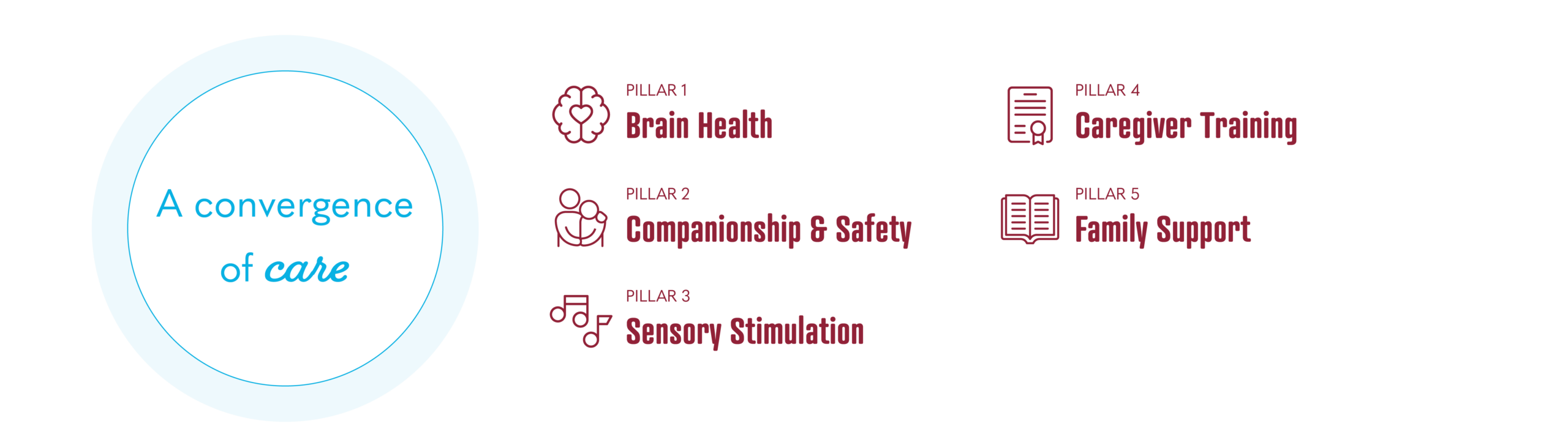
Dementia care is a layered approach. The brain needs stimulation, the body needs safety, the senses need engagement, the caregiver needs the right training, and the family needs guidance for what's ahead. SYNERGY HomeCare's Convergence of Care model is how we bring those layers together into one steady plan. Five pillars of support work in coordination at home, so what your loved one receives feels like a single coherent approach rather than five separate services.
- 1. Brain Health. Cognitive activities that exercise memory and focus, such as puzzles, reminiscence work, and structured conversation that help slow the impact of dementia on daily function.
- 2. Companionship and Safety. Consistent one-on-one attention paired with wandering prevention, fall awareness, and the human connection that eases anxiety and isolation.
- 3. Sensory Stimulation. Music, nostalgic entertainment, family photos, and robotic therapy pets that engage emotion and memory through the senses your loved one still responds to most.
- 4. Caregiver Training. Dementia-specific instruction in communication, behavior support, and recognizing the changes in condition that families need to know about.
- 5. Family Support. Our resources include a family resource guide, access to free respite support, and connections to local resources, which equip your family to understand the disease and navigate care options for your loved one. The result is a care solution that fits your family and changes as your loved one's needs change.

Speak with a Memory Care specialist today
 (781) 762-1114
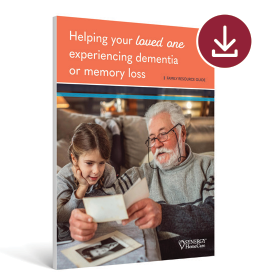 MEMORY CARE FAMILY RESOURCE GUIDE
Caring for someone living with Alzheimer's or dementia is hard, and no family should walk through it alone. Request a free e-download of our Memory Care Family Resource Guide for practical advice on what to expect, how to prepare, and how to find the right support at every stage of the disease.
RESPITE CARE FOR FAMILY CAREGIVERS
Caregiving is exhausting. SYNERGY HomeCare's respite care gives family caregivers a real break, whether that means a few hours to run errands, a day off, or an extended trip. Our trained caregivers step in so you can rest, work, or attend to your own health while your loved one stays safe and engaged at home. Reliable respite care is one of the most important investments a family caregiver can make in their own long-term ability to keep caring at home.
No-Cost Dementia Care Through the GUIDE Model
The Centers for Medicare & Medicaid Services has introduced the Guiding an Improved Dementia Experience, or the GUIDE Model. SYNERGY HomeCare has partnered with CMS-approved organizations to provide eligible clients with coordinated dementia care at no out-of-pocket cost. Qualified individuals receive up to 76 hours of complimentary in-home dementia care every program year (July 1 - June 30), along with care coordination and family support resources.
Learn more about the GUIDE Model
Speak with an In-Home Memory Care specialist today
(781) 762-1114
Frequently Asked Questions About In-Home Memory Care
In-home memory care is one-on-one support for people living with Alzheimer's or other forms of dementia, delivered at home by a trained dementia caregiver. Families avoid a facility move while their loved one receives help with daily tasks, personal care, safety, and engagement on a schedule that works for the family.
A memory care caregiver helps with daily life tasks like bathing, dressing, meal preparation, medication reminders, and mobility, while watching closely for safety risks like wandering or unsupervised cooking. They also engage your loved one in stimulating activities matched to their cognitive level, paired with companionship and emotional reassurance.
Yes. With the right care plan, many people with dementia can age in place safely. Caregivers reduce fall risks, manage medications, supervise high-risk activities, and watch for changes in condition that families need to know about, keeping the home structured, predictable, and secure.
Yes. Our caregivers complete specialized training in dementia care techniques, including communication strategies for someone with memory loss, calm de-escalation for challenging behaviors, and recognition of subtle changes in condition. We also match each client with a caregiver who fits their personality.
Sundowning is a pattern of late-day confusion, agitation, or restlessness that often appears in dementia. Our caregivers respond by dimming lights, reducing noise, redirecting to comforting activities, and keeping evening routines steady so your loved one feels settled.
Through the GUIDE Model, elegible Medicare beneficiaries receive up to 76 hours of complimentary in-home dementia care every year, along with care coordination and family resources at no out-pocket cost.
ADDITIONAL MEMORY CARE RESOURCES



Alzheimer’s and Dementia Caregiver Center | http://www.alz.org/care/overview.asp
Alzheimer’s Disease Education and Referral Center (ADEAR) National Institute on Aging | http://www.nia.nih.gov/alzheimers
Family Caregiver Alliance | https://www.caregiver.org/caregiver-resources/health-conditions/dementia/?via=caregiver-resources,health-conditions
Aging Life Care Association | https://www.aginglifecare.org/
