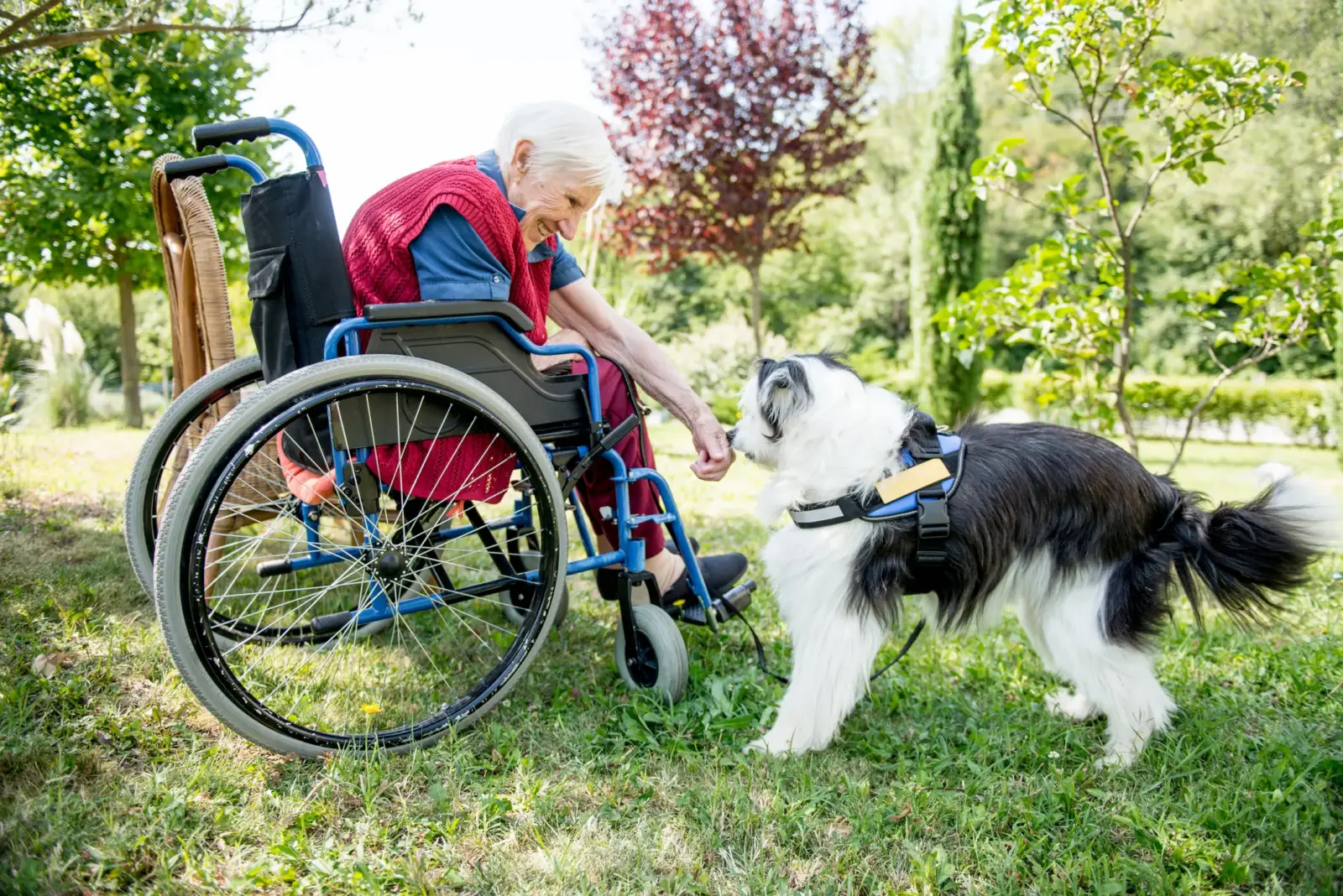
For many older adults, a dog is much more than a pet. They are a companion, a source of unconditional love, and an important part of the family. Having a dog can bring tremendous joy at any age, but as we get older, some of the responsibilities of pet ownership can become more challenging.
With the right support, however, older adults may be able to continue enjoying the companionship of a beloved pet while remaining safe and independent at home.
The Benefits of Having a Dog
Companionship and connection
Loneliness and social isolation can become more common with age, particularly for older adults who live alone. Having a dog in the home provides consistent companionship, affection, and someone to talk to throughout the day.
Encourages movement
Dogs naturally encourage us to get moving. Whether it’s taking a short walk, throwing a favorite toy, or simply getting up to fill a water bowl, caring for a pet can add gentle activity to an older adult’s daily routine and even strengthen heart health. In fact, studies have found that dog ownership is associated with a lower risk of cardiovascular-related death!
Provides purpose and routine
Pets depend on their owners, and that responsibility provides a sense of purpose. Morning feedings, afternoon walks, and bedtime routines can help create structure throughout the day.
Offers emotional comfort
There’s something special about having a dog curl up beside you at the end of the day. The affection and familiar presence of a pet can be especially comforting during periods of change, grief, or loneliness.
The Challenges of Dog Ownership as We Age
One important consideration is fall risk. A dog walking underfoot, pulling on a leash, or leaving toys around the house can create potential hazards. Physical tasks such as walking a dog or bathing them may also become more difficult.
Older adults experiencing memory changes may need additional help remembering feeding schedules, medications, grooming appointments, or veterinary visits. Transportation can also become an issue for seniors who no longer drive.
Tips For Success
If you or an aging loved one are considering a dog, think about adopting an older dog and smaller breed. Older dogs typically have less energy, therefore less physical activity requirements and may have a calmer disposition.
Getting a dog is a huge decision and should not be taken lightly. Get a pet you can take care of independently and meet its needs without neglecting your own.
How a Caregiver Can Help
Getting older doesn’t necessarily mean having to give up the companionship of a beloved pet. Sometimes, a little extra support can make all the difference!
Depending on the individual’s care plan and services available, a caregiver may be able to provide reminders about feeding routines, help keep pet areas organized to reduce tripping hazards, accompany a client outside with their dog, or help communicate pet-related needs and appointments with family members.
At Synergy HomeCare, we understand that aging at home is about more than completing a list of daily tasks. It’s about helping older adults maintain their independence, routines, and relationships. For some people, that includes the furry friend who has been faithfully by their side for years or is a new addition.
If you or a loved one could use additional support to remain safe, comfortable, and independent at home, contact us today to learn how personalized in-home care can help.
____________

Call us to find the home care solution that’s right for you.