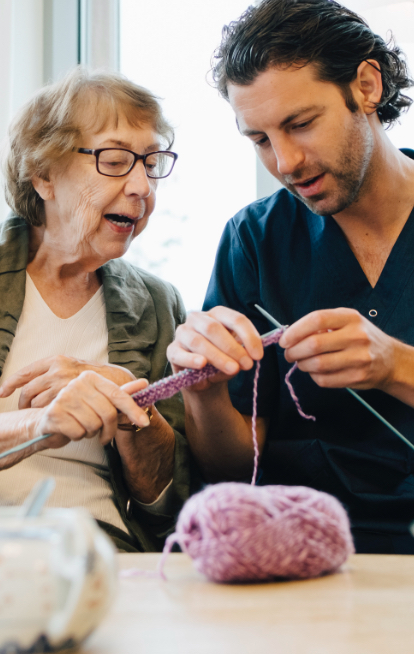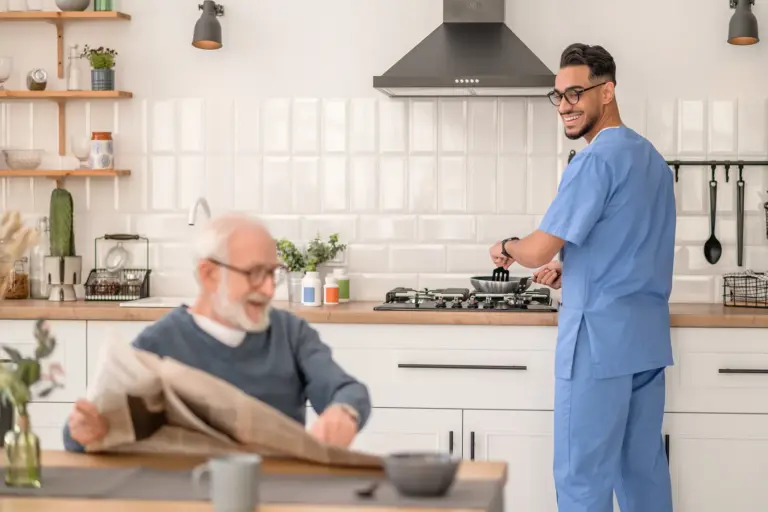
A good day at home can mean different things: getting ready without feeling rushed, cooking a favorite meal, or heading out to a familiar spot in the neighborhood. For an adult living with an intellectual or developmental disability (IDD), having the right support in place is what makes those ordinary moments possible. That is the heart of what we do.
As an approved Westside Regional Center (WRC) Personal Attendant Vendor (Vendor ID: PW9667), SYNERGY HomeCare of Santa Monica provides one-to-one daily living support for adults with IDDs in Santa Monica, at home where they feel most themselves.
What daily living support for adults with IDD involves
Daily living support is non-medical, hands-on help with the routines that shape a person’s day. It falls into two broad areas.
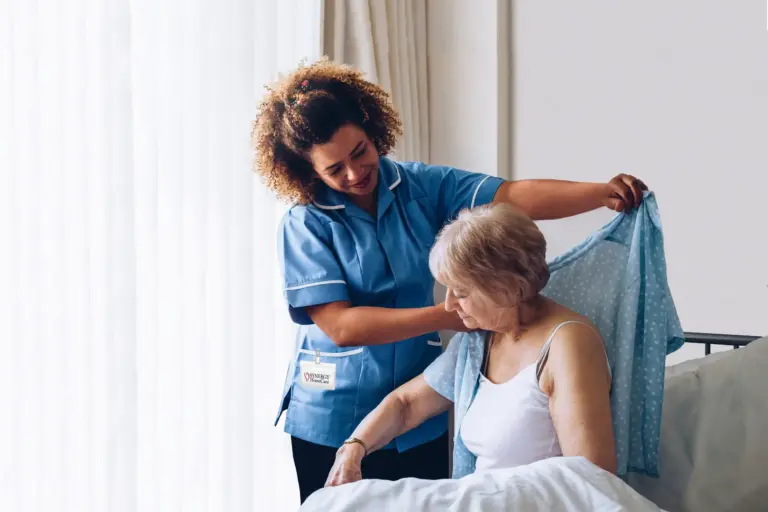
The first is everyday personal care, sometimes called activities of daily living, which covers things like bathing, dressing, grooming, and moving safely around the home.
The second is the practical side of things, such as preparing meals, staying on top of the day, getting to appointments and community spaces, and building the small skills that add up to greater independence over time.
The goal is to be there for the parts of the day where a little help makes a big difference, so your family member can do more for themselves and feel confident doing it. If you would like to see how this fits alongside our wider services, you can learn more about our in-home care in Santa Monica.
The kind of help we provide
Every person is different, so support is always shaped around the individual. Depending on what your family member needs, a caregiver may help with:
- Personal care, such as bathing, dressing, and grooming, offered with patience and respect
- Meal preparation and encouragement around healthy, familiar food
- Medication reminders to help keep a routine on track
- Mobility assistance for moving safely around the home and out in the community
- Building daily living skills, from tidying a room to managing a morning routine
- Community integration, like visiting familiar places and staying connected to the neighborhood
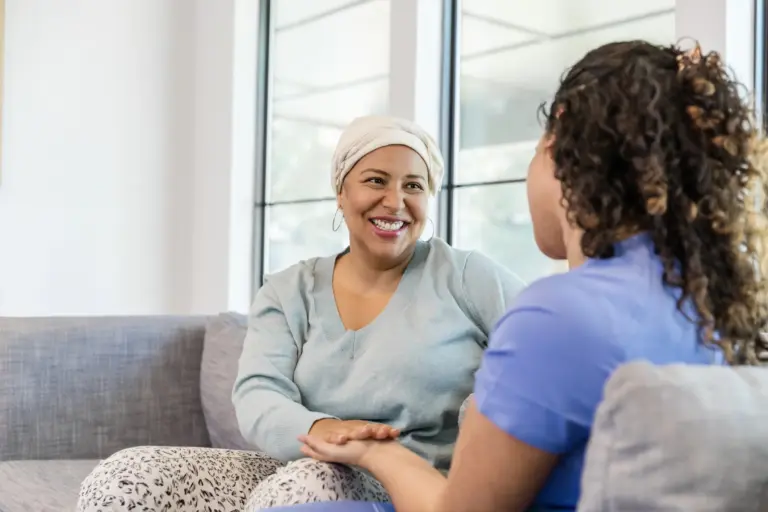
- Companionship and a steady, friendly presence throughout the day
The mix of support is set out in the individual’s plan, and the hours are authorized by the Regional Center’s Service Coordinator, so care reflects exactly what each person is approved for.
Signs your loved one might benefit from extra support
Every family reaches this point differently, and there is no single right moment to ask for help. Often it is a gradual sense that the day is getting harder to manage alone. You might notice that:
- Personal care tasks like bathing or dressing are becoming a daily struggle
- Meals are being skipped, or the fridge tells a different story than you would like
- Appointments, reminders, or medication are slipping through the cracks
- Your family member seems more isolated, or less connected to the things they enjoy
- You, as the person supporting them, are stretched thin and running low on rest
If any of this feels familiar, have a conversation about what personal attendant support could look like. There is no obligation in asking.
Support built around one person, not a template
The relationship between a person and their caregiver shapes everything else. We take real care to match your family member with a caregiver who suits their personality and pace, and we work to keep that caregiver consistent, so trust has room to grow. Seeing the same familiar face, week after week, is what makes care feel more like a friendship.
Every caregiver on our team is directly employed, background-checked, and supported by regular quality check-ins from our office. Since we opened, we have not missed a single shift, and our caregiver turnover stays far below the industry average, which means your loved one is more likely to see the same familiar face day to day.
You can read more about how we match families with the right caregiver and what to expect from our team.
State-funded support through Westside Regional Center
For many families, the reassuring thing is that this support can come at no cost to you. As an approved Westside Regional Center (WRC) Personal Attendant Vendor (Vendor ID: PW9667), we provide Personal Attendant services for adults with intellectual and developmental disabilities of all ages. Because this developmental disability support is state-funded through the Regional Center, families pay nothing out of pocket.
The process is straightforward. Your family member’s Service Coordinator at the Regional Center authorizes a plan based on their individual needs, and we provide the day-to-day support that plan calls for.
If you are exploring this option, you can find out more about our Westside Regional Center Personal Attendant services and how to get connected.
Rooted in Santa Monica
We are part of this community. Our team supports families across Santa Monica and the surrounding neighborhoods, including Beverly Hills, Brentwood, Pacific Palisades, and Marina del Rey.
Knowing the area means we can help your family member stay connected to the places and routines that make home feel like home, whether that is a regular walk, a favorite cafe, or simply the comfort of a familiar street.
How to get started
Choosing support is a personal decision, and you get to shape how it works. It starts with a free in-home consultation, where we take the time to understand your family member and answer your questions, with no pressure or obligation. From there, you decide the schedule, support, and how we fit into your family’s life.
We’re always here for you. Call (424) 289-6766 to schedule a free in-home consultation and discuss how home care could support your loved one’s recovery.
Frequently asked questions
What is daily living support for adults with IDDs?
It is non-medical, one-to-one help at home with everyday routines, from personal care and meals to building skills and staying connected to the community. The aim is to support independence, not replace it.
What does a personal attendant do for adults with IDD?
A personal attendant provides hands-on, non-medical help at home, with personal care, meals, medication reminders, getting out into the community, and building everyday skills. The role is shaped around the individual’s plan and goals.
Is there a cost to families?
For individuals eligible through the Westside Regional Center, our Personal Attendant services are state-funded, which means families pay nothing out of pocket.
Can the support change over time?
Yes. Support is flexible and can be adjusted as your family member’s needs and goals change, based on the plan set with their Service Coordinator.
Do you provide medical care?
No. We provide non-medical, in-home support focused on daily living, independence, and companionship rather than clinical or skilled nursing care.
___________

Call us to find the home care solution that’s right for you.
(424) 289-6766